$4.99/mo - Save 61% With Exclusive 2-Year Plan + 4 Months Free!Claim Now
5 Best Residential VPNs in 2026: Top For Privacy & Streaming
Last updatedFebruary 10, 2025
Naveen Zehra
Editor
Naveen Zehra, an editor at VPNRanks.com, has a decade of writing experience. With a strong background in tech and privacy, she creates easy VPN guides. Passionate about privacy, she understands data tracking and its impacts, ensuring her insights resonate with readers.
Naveen Zehra, an editor at VPNRanks.com, has a decade of writing experience. With a strong background in tech and privacy, she creates easy VPN guides. Passionate about privacy, she understands data tracking and its impacts, ensuring her insights resonate with readers.
Expert Opinion: NordVPN stands out as the best residential VPN for its unmatched security, extensive server network, and user-friendly features. It combines advanced privacy tools with reliable access to Dutch residential IPs, making it perfect for all-around use.
In today’s digital age, privacy and security are more crucial than ever. With 71% of U.S. adults reportedly monitored online, finding ways to protect personal data is essential. A residential VPN offers enhanced security by masking your IP address and providing private, unrestricted access to the internet.
A residential VPN is a virtual private network that provides a secure internet connection using a residential IP address linked to a physical location. Unlike other VPN types, the best Residential VPN offers better privacy, faster speeds, and more robust security.
This article will delve into the top Residential VPNs 2026 and explain why they are crucial for individuals prioritizing their online privacy and security. A residential VPN can significantly improve your online safety, whether you are a business owner or a casual internet user.
Best Residential VPN – Quick Overview
Here’s a concise overview of the best Residential VPN, focusing on their applicability and performance:
NordVPN is renowned for its robust security features. With advanced encryption and a strict no-logs policy, NordVPN ensures your online activities remain private and protected.
It offers 3000 servers in about 50 countries and is headquartered in the USA. Offers a free plan and a premium version with a 7-day money-back guarantee.
Editor’s Advice: While the residential VPNs mentioned in this blog are highly reliable, I recommend considering the best VPN services, including NordVPN, Surfshark, or CyberGhost, to explore broader options and enhanced features.
Check out our detailed reviewsection below for a deeper analysis of each provider.
Why Do You Need a Residential VPN?
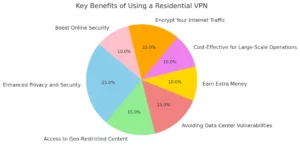
Residential VPNs enhance security by avoiding vulnerable data centers using IP addresses from ISPs instead. This reduces suspicion of services that ban VPNs, ensuring seamless access to geo-restricted content and better online privacy. Aside from that, there are several other benefits of using a Residential VPN, which I have mentioned below.
Benefits of Using a Residential VPN:
Curious about how VPNs safeguard your privacy? Read more onencryption standards.
Comparison Between Residential VPN Providers
Here’s a quick comparison table of the best Netherlands VPNs with Residential IP and their significant features:
I reviewed several residential VPNs that offer dedicated IP addresses, which allow you to browse the internet from a specific location and appear as an ordinary user. Here is a list of the 5 best Residential VPN providers with dedicated and dynamic IP addresses, along with their main features:
✔️ You want unlimited device connections for family use.
✔️ You need an affordable VPN with reliable residential IPs.
✔️ You value a clean, easy-to-use interface.
Avoid If:
❌ You need advanced customization options.
❌ You prefer a VPN with more extensive server coverage in the Netherlands.
❌ You are looking for a VPN with unique privacy features like Double VPN.
Bottom Line: Surfshark is budget-friendly and perfect for everyday use. It’s ideal for families needing multiple connections with good speed and privacy.
✔️ You need top-notch security with features like Double VPN.
✔️ You value a large server network with many residential IP options.
✔️ You want a trusted provider with audited privacy policies.
Avoid If:
❌ You find the map interface complex on smaller screens.
❌ You need more than 10 simultaneous connections.
❌ You prefer a simpler, list-based server selection.
Bottom Line: NordVPN offers advanced security and vast server choices. It’s excellent for users who want maximum privacy and reliable access to Dutch residential IPs.
✔️ You want a user-friendly VPN for quick and easy connections.
✔️ You need a VPN with dedicated servers for streaming and privacy.
✔️ You value a wide range of server locations in residential areas.
Avoid If:
❌ You need deep customization options.
❌ You prefer a lighter interface with fewer features.
❌ You are looking for the fastest speeds in the market.
Bottom Line: CyberGhost is simple, reliable, and great for casual use. It’s perfect for those who prioritize ease of use and consistent access to residential IPs.
Available in the US, UK, Netherlands, Germany, France, Canada, Australia, and more
Servers
3,000+ servers in 50+ countries
Encryption
AES-256 military-grade encryption
Tunneling Protocols
OpenVPN, WireGuard, IKEv2, L2TP/IPsec, SSTP, PPTP
Stealth VPN & Obfuscation
Stealth mode overcomes VPN blocks & deep packet inspection
No-Logs Policy
Strict no-logs policy to protect user privacy
Streaming Access
Unblocks Netflix, Hulu, Amazon Prime, Disney+, BBC iPlayer, and more
Speed Performance
High-speed servers optimized for gaming, streaming, and torrenting
Simultaneous Connections
Supports up to 12 devices
Compatibility
Works on Windows, macOS, Android, iOS, Linux, and routers
Kill Switch
Automatic kill switch for data protection
DNS & IPv6 Leak Protection
Prevents IP and DNS leaks for added security
Port Forwarding
Available for better P2P connections
Ad & Malware Blocker
Blocks intrusive ads, trackers, and malicious sites
24/7 Live Chat Support
Dedicated customer support available 24/7
Money-Back Guarantee
7-day money-back guarantee (not applicable on dedicated IPs)
Free Trial
No free trial available
Exclusive Deal
VPNRanks readers can enjoy an exclusive VPN deal! $4.16/mo
Subscribe If:
✔️ You want full control over VPN settings with stealth features.
✔️ You need low latency for gaming or streaming.
✔️ You value security and privacy with customizable options.
Avoid If:
❌ You find the setup process too complex.
❌ You are new to VPNs and prefer a more straightforward service.
❌ You need a more user-friendly interface.
Bottom Line: TorGuard is best for tech-savvy users who need custom setups. It’s great for advanced residential use, offering flexibility and performance.
Available in multiple locations, including the US, UK, Netherlands, Germany, Canada, and Australia
Servers
6500 servers in 78+ countries
Encryption
AES-256 military-grade encryption
Tunneling Protocols
OpenVPN, SSTP, IKEv2, L2TP/IPsec, WireGuard
Split Tunneling
Allows users to select which apps use the VPN and which use direct internet
No-Logs Policy
Independently audited zero-logs policy
Streaming Access
Unblocks Netflix, Hulu, Amazon Prime, Disney+, BBC iPlayer, and more
Speed Performance
Fast servers with unlimited bandwidth, no throttling, and smooth 4K streaming
Simultaneous Connections
Supports up to 10 devices
Compatibility
Works on Windows, macOS, Android, iOS, Linux, Firestick, and routers
Kill Switch
Automatic kill switch for data protection
DNS & IPv6 Leak Protection
Ensures no data leaks for enhanced privacy
Port Forwarding
Available as an add-on for secure remote access
24/7 Live Chat Support
Round-the-clock customer service for quick issue resolution
Money-Back Guarantee
31-day money-back guarantee
Free Trial
7-day trial available on mobile
Exclusive Deal
VPNRanks readers can enjoy exclusive VPN deals! $2.95/mo
Subscribe If:
✔️ You want a VPN with numerous global server locations.
✔️ You need an affordable option for accessing Dutch content.
✔️ You value basic but reliable security and privacy.
Avoid If:
❌ You need advanced encryption features.
❌ You prefer a VPN with a simpler setup process.
❌ You are looking for fast speeds comparable to top-tier VPNs.
Bottom Line: PureVPN is versatile and affordable. It’s a solid choice for basic residential needs without the frills of high-end VPNs.
When I selected the top residential VPNs, I needed to consider their wide range of functionality and features carefully. Here’s how I tested and chose the best Residential VPN for streaming and other purposes:
Network Scope and Performance: I looked at the size and speed of each provider’s network, including server locations and the availability of dedicated IPs. I also ensured they were compatible with various devices and operating systems you might use.
Speed and Access: I tested each VPN provider’s connection speed and streaming performance to see how well they could circumvent geo-restrictions, ensuring that you would have access to your desired content.
Security Measures: I evaluated the strength of encryption and the variety of protocol options each provider offered. This step was crucial to ensure that your data would be well-protected.
User Experience: I considered factors like ease of use and the overall user interface. This helped me determine how straightforward and enjoyable your experience with the VPN would be.
Cost-Effectiveness: I analyzed the value for money of each provider, focusing on their pricing plans, the number of simultaneous connections allowed, and any additional security features. This helped ensure that you would get the most out of your investment.
A VPN’s security depends on encryption strength. See how these VPNs measure up in the encryption standards section.
What is a Residential VPN and How Does it Work?
A residential VPN routes your internet traffic through residential IP addresses rather than typical VPN servers. This often operates on a peer-to-peer (P2P) basis, where users share their IP addresses with others, allowing mutual access to a pool of residential IPs.
The top residential IP VPNs provide superior privacy and effectiveness compared to dedicated IP and traditional datacenter VPNs. Because the IP addresses provided by residential VPNs are verified and dedicated, they enable you to browse the internet, making you appear like a typical user.
Understanding Different Types of Residential VPN IP Addresses
Residential VPNs provide users with IP addresses from residential internet service providers, each offering unique advantages and disadvantages. There are three main types:
Dedicated IPs: These IP addresses are exclusively assigned to a single user, giving better control over one’s online identity. They are less likely to be flagged as suspicious by websites or services that monitor IP addresses, resulting in a more stable and secure browsing experience.
Shared IPs: These IP addresses are used by multiple users simultaneously, enhancing anonymity by mixing your online activity with that of others. However, shared IPs are more prone to being flagged as suspicious by websites or services that monitor IP addresses.
Dynamic IPs: They feature periodically changing addresses, enhancing security, and reducing tracking risks. They balance the control of dedicated IPs with the anonymity of shared IPs, improving access to restricted services. However, their variability may disrupt service continuity and complicate stable connection activities like online gaming or server hosting.
Virtual Private Networks (VPNs): VPNs allow users to connect to the internet securely through a private network, even when using public networks like Wi-Fi hotspots. They improve security and privacy by encrypting data and masking the IP address. However, VPNs can be slower than regular internet connections and may be blocked by some websites.
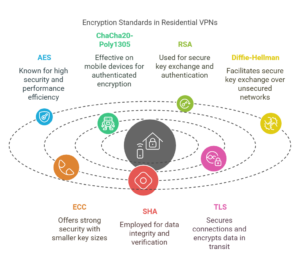
What Encryption Standards are Used in Residential VPNs?
Residential VPNs utilize robust encryption standards to safeguard user data and ensure secure online activities. These standards form the backbone of VPN protocols, providing privacy and protection against unauthorized access.
Residential VPNs or Datacenter VPNs – What is the Difference?
Residential and data center VPNs’ main differences are their legitimacy, cost, and speed. I have outlined how each technology differs in functionality and privacy to clarify which service best suits your needs.
Feature
Residential VPN
Data Center VPN
Legitimacy
Higher, appears as regular residential IP
Lower, easily flagged as VPN IP
Cost
Generally higher for individual use
Often more affordable for bulk usage
Speed
Potentially slower due to residential networks
Often faster due to dedicated infrastructure
IP Source
ISP (Internet Service Provider)
Data Center
Detection by Services
Less likely to be detected as a VPN
More likely to be detected and blocked
Access to Geo-Restricted Content
Better, less suspicion from services
Often blocked by geo-restricted services
Privacy and Security
Higher, avoids data center vulnerabilities
Lower, susceptible to data center breaches
Residential and Data Center VPNs provide complete anonymity, security, and online protection. Data Center VPNs excel in cost, accessibility, and server network reach. However, only reliable residential VPNs ensure 100% anonymity, security, privacy, and global reach. Choosing the best and most cost-effective options is crucial as the VPN industry grows.
Select a VPN service that offers residential IP addresses. Some popular options include Surfshark, NordVPN, and CyberGhost.
Subscribe to the chosen VPN service. Ensure you select a plan that includes the option for a residential IP address/dedicated IP.
Finalize your subscription by completing the payment. Some VPN services offer additional features for an extra cost, such as enhanced security or faster speeds.
Download and install the VPN application on your device. Most providers offer apps for various platforms, including Windows, macOS, Android, and iOS.
Open the VPN application, login with your credentials, and select the residential IP address option. Connect to the server to start using your residential IP.
Following these steps, you can quickly obtain and use a residential IP address to enhance your online privacy and security.
Common Residential VPN Issues and How to Troubleshoot Them
While residential VPNs can be convenient, they can sometimes be frustrating when they stop working as expected. Here are some troubleshooting tips to get you back on track:
Can’t Connect? Try switching servers, changing protocols, restarting your device or router, or switching to a wired connection.
Slow Speeds? Server overload or network problems might be the culprit. Try a different server or a wired connection for a speed boost.
Exposed by DNS Leaks? Ensure you’re using the VPN’s DNS servers and check for leaks to avoid exposing your activity.
Compatibility Woes? Check whether your device is compatible, restart or reinstall the app. If all else fails, consider a different provider known for reliability.
Firewall Frustration? Try temporarily disabling your firewall or configuring it to allow VPN traffic.
Real-life Reviews of Residential VPNs by Users [Reddit Insights]
Reddit users have shared mixed experiences about residential VPNs—some find them essential for overcoming restrictions and securing their online activity, while others struggle with slow speeds and flagged IPs. Here’s what users are saying:
Finding a Fast & Affordable Residential VPN
A lot of people on Reddit are frustrated with residential VPNs being too slow or too expensive. One user asked for recommendations after testing multiple services, only to find most were laggy and overpriced.
🔹 What Redditors Say: Some recommend checking privacy-focused VPNs like Mullvad or ProtonVPN, but note that they aren’t always great for streaming. Others suggest looking at VPN comparison sites before committing to a provider.
📌Want to compare VPN speeds? Check out the VPN comparison table for a breakdown of performance.
Avoiding Flagged IPs & VPN Blocks
One common issue is VPN IPs getting flagged, making it harder to access certain sites. A Redditor wanted a VPN that looked like a real home IP, but found that many services still routed traffic through data centers, leading to detection and bans.
🔹 Reddit User Solution: Some suggest setting up a personal VPN on a home router for true residential traffic. Others recommend TorGuard’s dedicated residential IPs, though they come at an extra cost.
A few Reddit users mentioned that residential VPNs help avoid security issues with banking apps and crypto exchanges. One user shared how their account got blocked when using a standard VPN, but switching to a residential IP fixed the problem.
🔹 What This Means for You: Websites trust residential IPs more because they’re less likely to be shared with scammers. This also reduces annoying CAPTCHAs, making logins and transactions smoother.
Some Redditors prefer setting up their own VPN at home rather than relying on paid services. One user suggested using a travel router with a built-in VPN to disguise their location while keeping total control over their connection.
🔹 Who This Is For: If privacy is your top concern and you don’t mind some technical setup, hosting your own VPN might be a solid alternative to buying a residential VPN plan.
📌Looking for an easier option? Check the best residential VPNs that are ready to use.
Additional VPN Guides by VPNRanks
Best VPN for iPad: Keep hackers and snoopers at bay with a reliable one.
Setting Up a VPN Connection: A user connects to the residential VPN server by providing a username, password, and other identifying details. The provider authenticates the user and establishes a secure connection.
Encryption: The residential VPN provider encrypts the data transmitted between the user and server, ensuring privacy and security.
Transfer: Encrypted data is securely sent and received through the residential VPN provider’s servers.
Disposal: The provider discards the data after it reaches their server, preventing unauthorized access.
What is the best residential VPN?
The best residential VPNs in 2026 include NordVPN, known for its overall performance, Surfshark for affordable manual connections, PureVPN offering secure residential IPs, and CyberGhost, which provides high-speed service with a dedicated IP option.
Why choose a residential VPN over other types?
Residential VPNs offer higher legitimacy, reducing detection by services that block VPNs. They provide enhanced privacy, better access to geo-restricted content, and avoid data center vulnerabilities, ensuring superior online security and anonymity.
How secure is a residential VPN in protecting Dutch users’ data?
Residential VPNs are highly secure because they don’t rely on data centers, which can be vulnerable to breaches. Instead, they use residential IP addresses from ISPs (Internet Service Providers), making them less likely to be detected and blocked by services that ban or restrict VPN use. This ensures enhanced privacy and security for your online activities.
Is NordVPN a residential VPN?
No, NordVPN does not provide residential IPs. However, it does offer a dedicated IP, which is an IP address exclusively assigned to you, delivering similar benefits to those of a residential IP.
Are residential VPNs legal?
Yes, residential VPNs are completely legal. While the VPN technology itself is legal in most countries, your purpose behind using a VPN can be considered legal or illegal. Therefore, I always recommend you be aware of whether your purpose is legal in your country.
What is the difference between a VPN and a residential VPN?
The main distinction between a residential VPN and a regular VPN lies in the type of IP address they provide. Residential VPNs utilize a peer-to-peer (P2P) network to route your internet traffic through a residential IP, which is typically owned by another user, giving the appearance of regular residential internet usage. In contrast, regular VPNs assign IP addresses from their own data centers.
Final Thoughts
Choosing a reliable best residential VPN can be challenging. I aim to ensure transparency and provide you with the most reliable and up-to-date information on the best residential VPN with my review, detailing how I evaluate and select the best VPN providers.
Residential VPNs are good for anonymity, avoiding detection, and unblocking streaming services and other websites compared to datacenter VPNs. Only the best residential VPN keeps you secure and protected with its robust features at a low cost.
















![Best Chrome VPN Extensions [Updated in 2025]](../../wp-content/uploads/2024/03/Best-Chrome-VPN-Extensions-300x131.png)